




 Study day on funeral practices
Friday October 13, in the Auditorium of the Cernuschi Museum from 12:15 p.m. to 6 p.m.
Coordination: Adrien VIEL, filmmaker and anthropologist, associated researcher at the laboratory of anthropology, archeology and biology (LAAB, Paris-Saclay) and at the center for studies in the social sciences of religion (CéSor EHESS-CNRS) and Juliette CAZES, thanatologist and independent researcher.
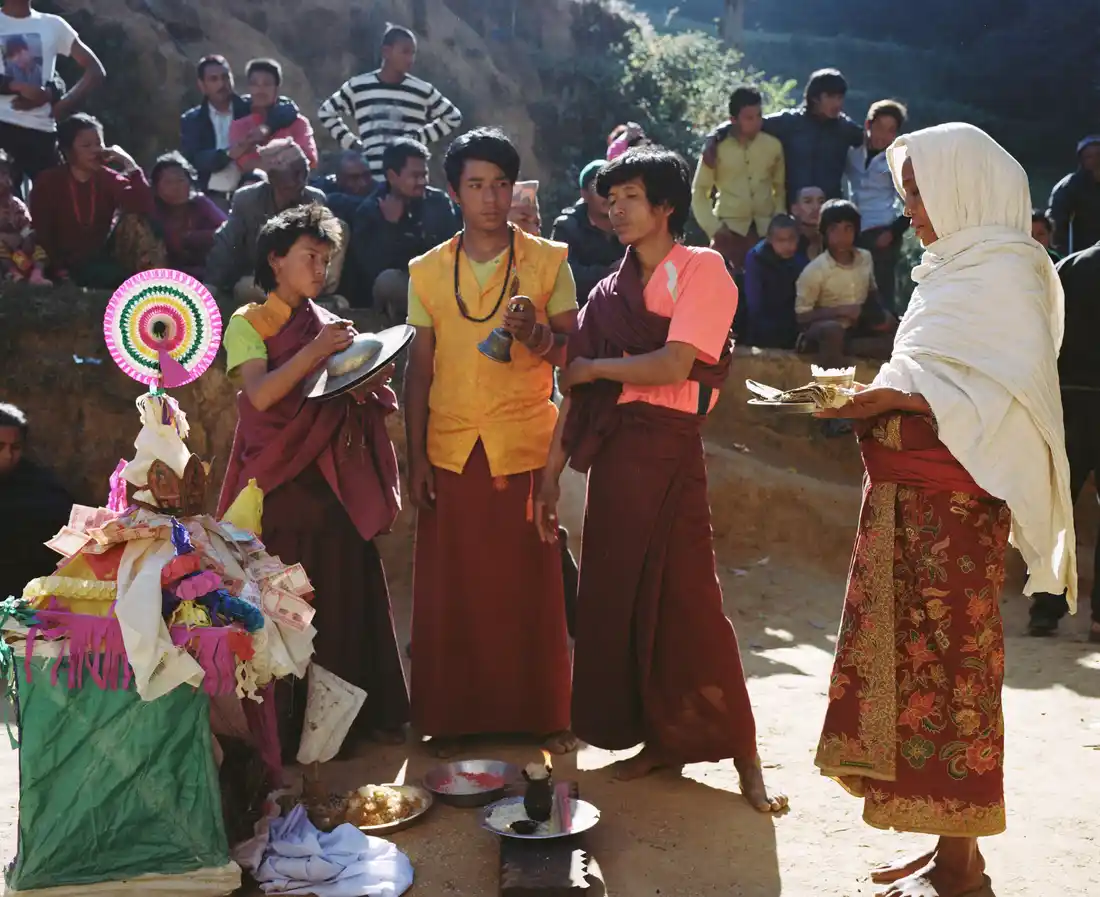
In Plato's Phaedo, Socrates argues that life is born from death and death from life, in an endless cycle that gives meaning to existence. What Plato formulates as a philosophical argument, certain human societies experience it as obvious: dying is not enough to disappear. This study day aims to question, from a multidisciplinary perspective, the ways in which societies take care of their deceased. It will not only be a question of reflecting on death as an event, but on everything that the living do for their dead, in order to ensure that the path to rest is well found, so that, at peace, they become ancestors rather than ghosts. Certain Buddhist populations in Nepal distinguish two ritual sequences, one devoted to the body and the other to the soul, sometimes separated by twenty-one days. At a time when Western societies tend to keep death at a distance, out of sight and out of social life, what do we lose when the funeral rite - from the funeral home to the ceremony - is accomplished in just a few days? In this world of immediacy, where the silence of the dead often weighs like a void rather than a presence, this meeting proposes to combine the perspectives of anthropology, sociology, history or even literature and thanatology to reflect on the place of our deceased, not as simple absentees, but as beings with whom the living compose and maintain lasting relationships.
This day will be an opportunity to rediscover what these local practices, coming from elsewhere or from the past, tell us about us, passing humans, whose body returns to the earth, and whose soul, where societies have agreed to make a place for it, continues to inhabit other worlds. It invites us to shift our gaze to ask, with the social sciences, the question that perhaps lies beneath all the others: why do the living deploy so much energy for their dead, if there is nothing left afterwards?